
I’ve got a favourite exercise on the criteria families use in choosing a school for their child. As with most quantitative tools, it’s only really effective when complemented by qualitative research such as one-to-one parent interviews. Heritage is a criteria that tends to vary, depending on the school and its target market. But most importantly, it differs according to the strategic choices of the school leadership.
Therefore, I would argue that the answer to the question, ‘how important is your school heritage?’ is this – It depends on how important you make it.
As the leadership of the school, you can make heritage into an asset of significant value, or you can simply make it an item on the school website under the tab, ‘About us’.
Heritage is a soft issue that can bring your story alive
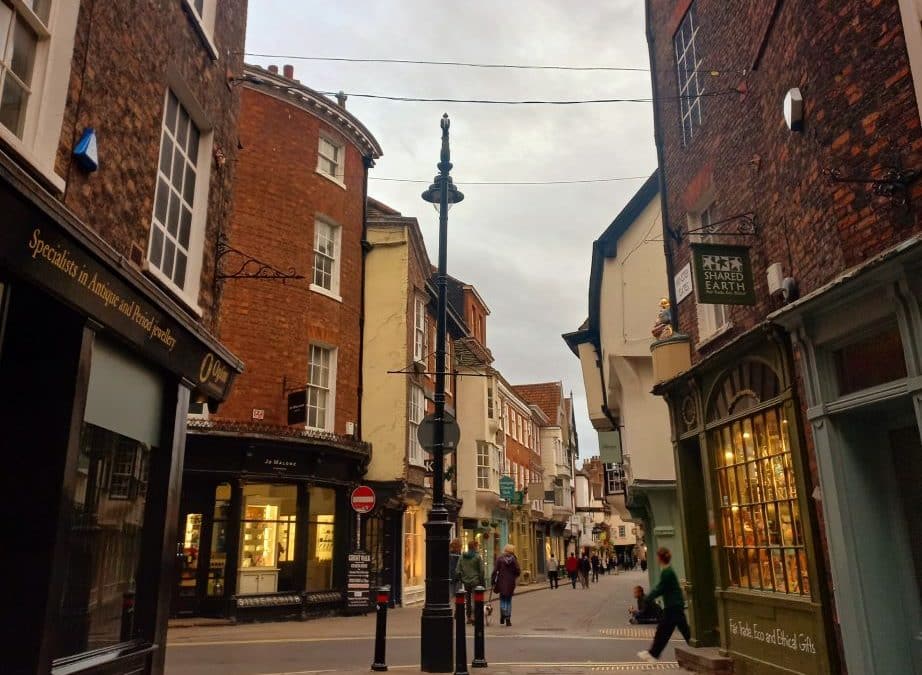
I was recently on a whirlwind visit to the city of York in England, the birthplace of my maternal great-grandfather. My sister had initiated it, and we set off to view the landmarks she had identified through her research on our ancestry.
Up to that point, the exercise had been largely superficial. Although we had seen the birth and census records, the places were points on a Google map.
Walking the streets of York has made my own heritage come alive to me. We knew Charles Sanderson was a coachman, but seeing the cobbled streets and ancient city walls, finding the site of the Bishopshill Coachworks where he was based, eating British cod and chips at the oldest inn in York on the street where he lived – These are the moments that changed my perspective and added so much value to the story. They’ve somehow given further substance to our identity as a family.
When developing a market positioning for a school, we separate the hard and soft issues:
- Hard issues include: swimming pool, music centre, academic results, transport, IT infrastructure, finances, awards, staff qualifications.
- Soft issues include: reputation, caring teachers, ethical leadership, distinctive branding, diversity, innovation, heritage, beliefs.
The two are separated because it’s much easier to copy hard issues than soft issues when building a compelling value proposition.
Heritage falls clearly into soft issues. It tends to be emotive and impossible to duplicate. Alumni can be especially attached to your heritage, and they need to be included in any market research related to the school heritage and branding.
The dangers of heritage
‘Starting with a clean slate’ and ‘new, high-tech, eco-friendly infrastructure for innovative thinking’ – These words may be used in marketing young schools with no history. Where there are no legacy systems, there is only one way forward, and that is up. Whereas well-established schools can be held back by existing processes and ways of doing things.
Alumni can also hold on to heritage to a point where it works against the school moving forward. Once again, make sure alumni are involved and included in any market research and strategy. It will take time and effort, but can have significant positive impact in the longer-term.
This makes it really important to manage school heritage well from a strategic marketing perspective. Heritage and brand are closely related. Aspects of heritage can negatively impact the brand and lead to unexpected public relations crises when current world events and sentiments shift. Suddenly, not only is your school brand less relevant, but it can threaten the sustainability of the school.
Heritage can carry heavy baggage, but it can also be the foundation that differentiates the school. It all depends on how the school leadership chooses to approach this key criterion.
Three things to do about your school’s heritage
In marketing strategy for independent schools, heritage is always included in some way, in my experience. Market research provides independent input to create the current and future view which allows for heritage to be optimised rather than simply reproduced. This is done with the target market (ideal client personas) in mind, as well as the unique strengths of the school.
I would recommend the following to get your school better positioned in terms of its heritage.
- Conduct independent market research to understand the perspective of the staff, current parents, students and past students and include the aspect of heritage and branding in the questions. If possible, explore more of the softer issues. This should be done every 5-10 years.
- Create (or refresh) your school’s market positioning in the mind of your portfolio of personas. Do this using particular focus on understanding and extracting the element of heritage according to the market research. Then bring this through in the messaging and platforms.
- Tell the story of the heritage of the school as a key theme in your marketing promotions and branding, as well as across the internal and external school communications and activities. Break the story up into parts/ chapters/ sub-themes and use these as term themes, events or subject project ideas, drama productions, artworks and speeches.
What if we have no heritage?
Create one.
Schools are communities, and communities need to create belonging. Heritage, or a shared history, helps build identity and unity, reinforcing the mission of the school.
Start by including heritage in your marketing strategy, and seeking to build this aspect into the brand as it grows and develops. Heritage can be the differentiator that brings your school story alive and makes it stand out in the eyes of your current and prospective families.
Contact me if you need help in market research or marketing strategy for your school. I offer free online calls to see if I can assist. Book via my website here.

I'm Keryn House
I enjoy writing on my niche in marketing strategy for independent schools. I’m inspired by global trends driving change in this sector – from consumer trends to educational trends to market and macro trends.
I like to draw from my background in strategy across multiple sectors as well as my personal and professional journey to craft short conversational and topical pieces.
I hope you feel informed, inspired and supported as readers of this blog from wherever you are in the world. I encourage comments and suggestions on content. Please also connect with me on my social platforms.